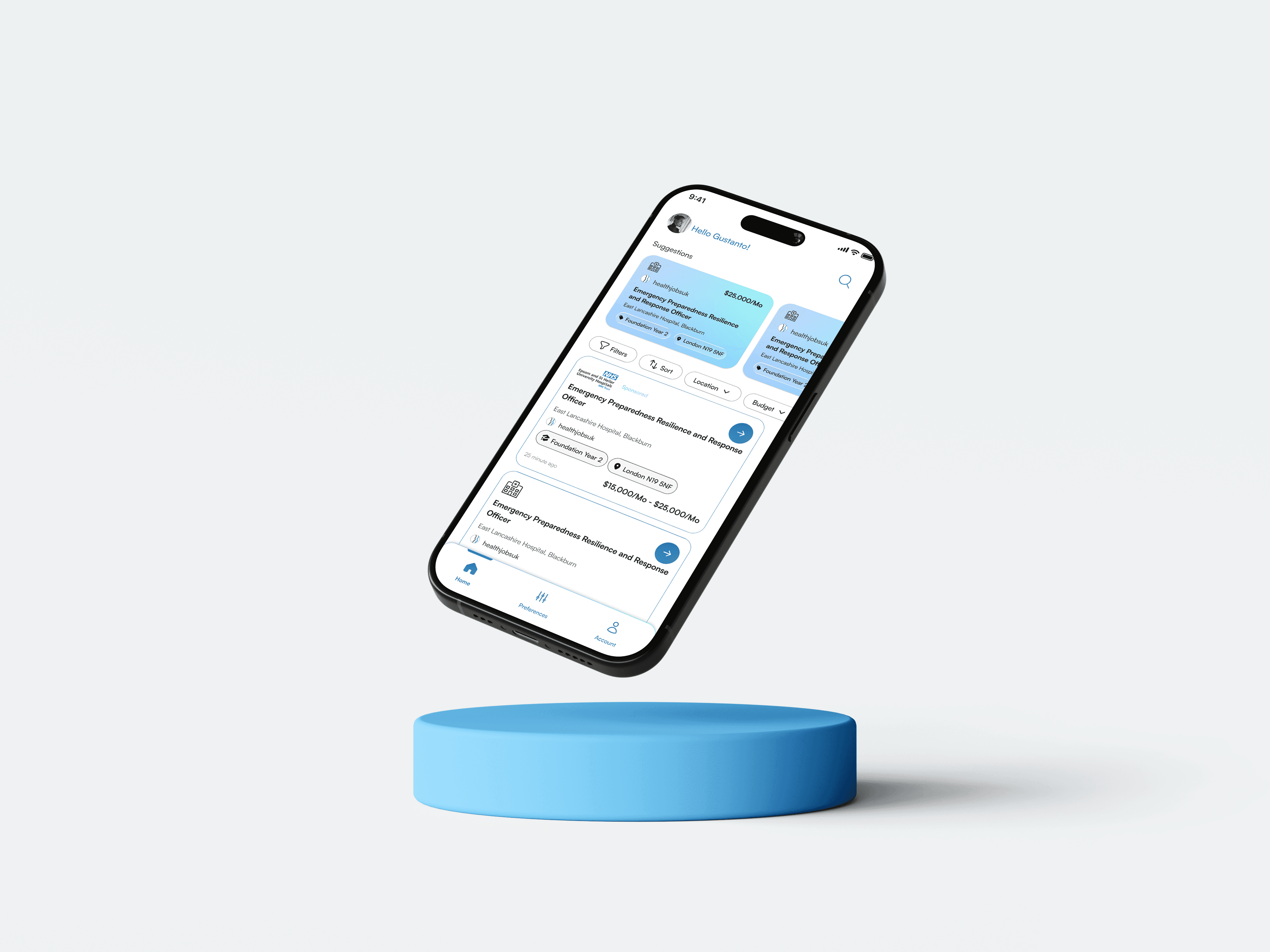
Led the redesign of the Parivartan Elevate Dashboard, transforming complex OOH campaign data into intuitive, visually engaging experiences. Improved data visualization, interactivity, and system scalability, resulting in a 65% increase in task efficiency, 40% faster data interpretation, and reduced redundancy in target audience management workflows as well as multi tenant management.
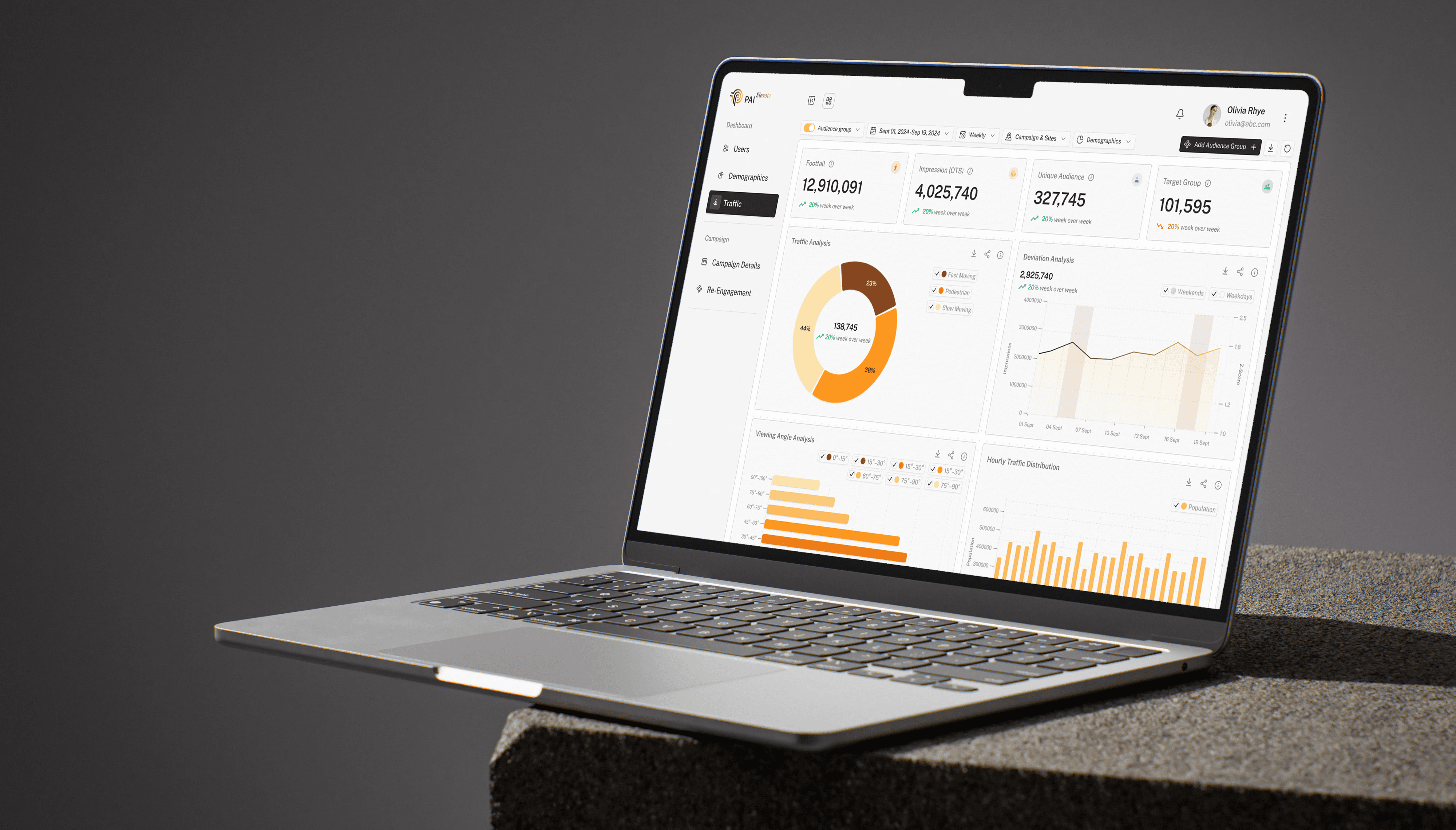
Parivartan is an AI-powered AdTech platform designed to revolutionize Out-of-Home (OOH) advertising by bridging the gap between offline visibility and digital measurability. It offers advertisers and inventory owners a full-stack ecosystem to plan, monitor, and attribute campaign performance with precision.
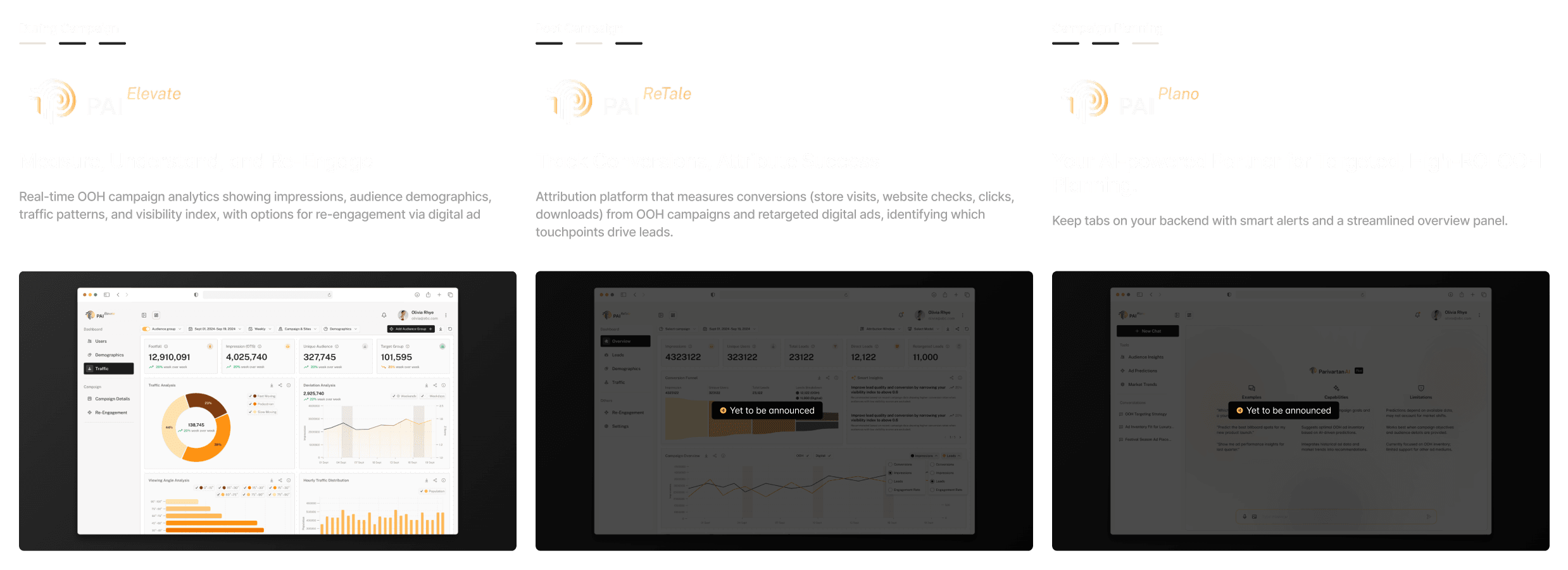
To be built around three core products — Elevate (real-time campaign analytics), ReTale (attribution and lead tracking), and Plano (AI-driven planning assistant). ReTale and Plano are still in the product planning phase and their design & development has not begun at the time of this case study.
Parivartan enables brands to measure visibility, audience quality, and conversions across billboards, digital touchpoints, and retargeting channels.
01
Establish the Parivartan Design System to unify UI components, ensure scalability, and maintain consistency across products.
02
Redesign the Elevate Dashboard to enhance aesthetics, data visualization, interactivity, and overall user experience.
03
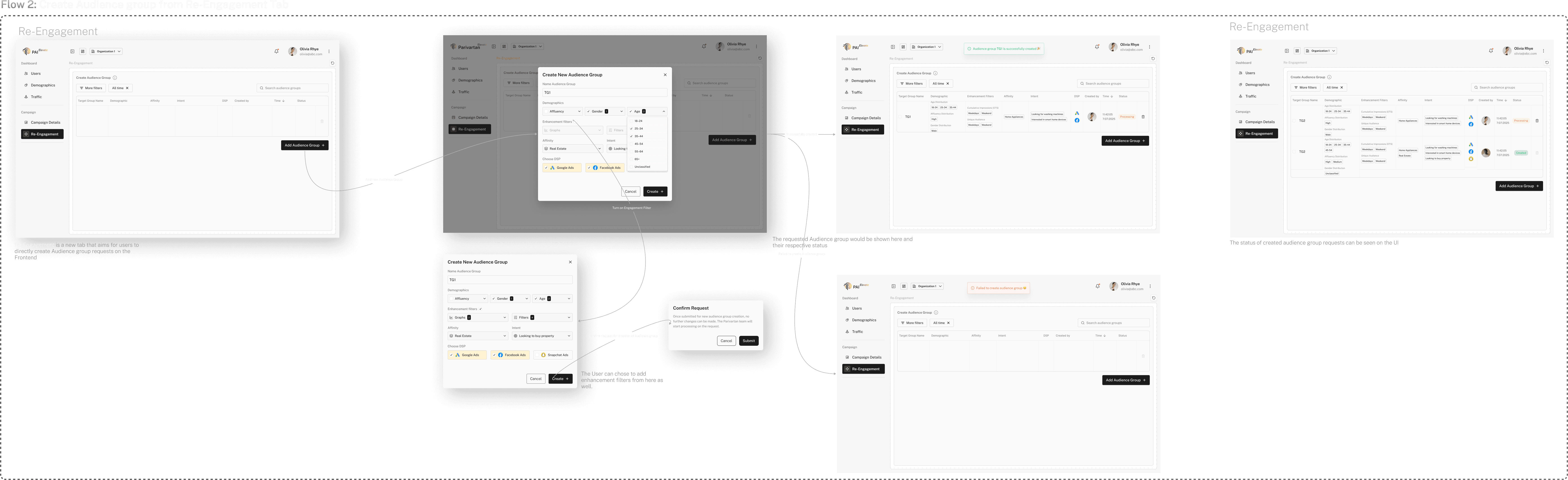
Integrate target audience creation directly into the UI to improve transparency for retargeting while also eliminating redundant backend requests and streamline multi-group re-engagement through digital mediums.
04
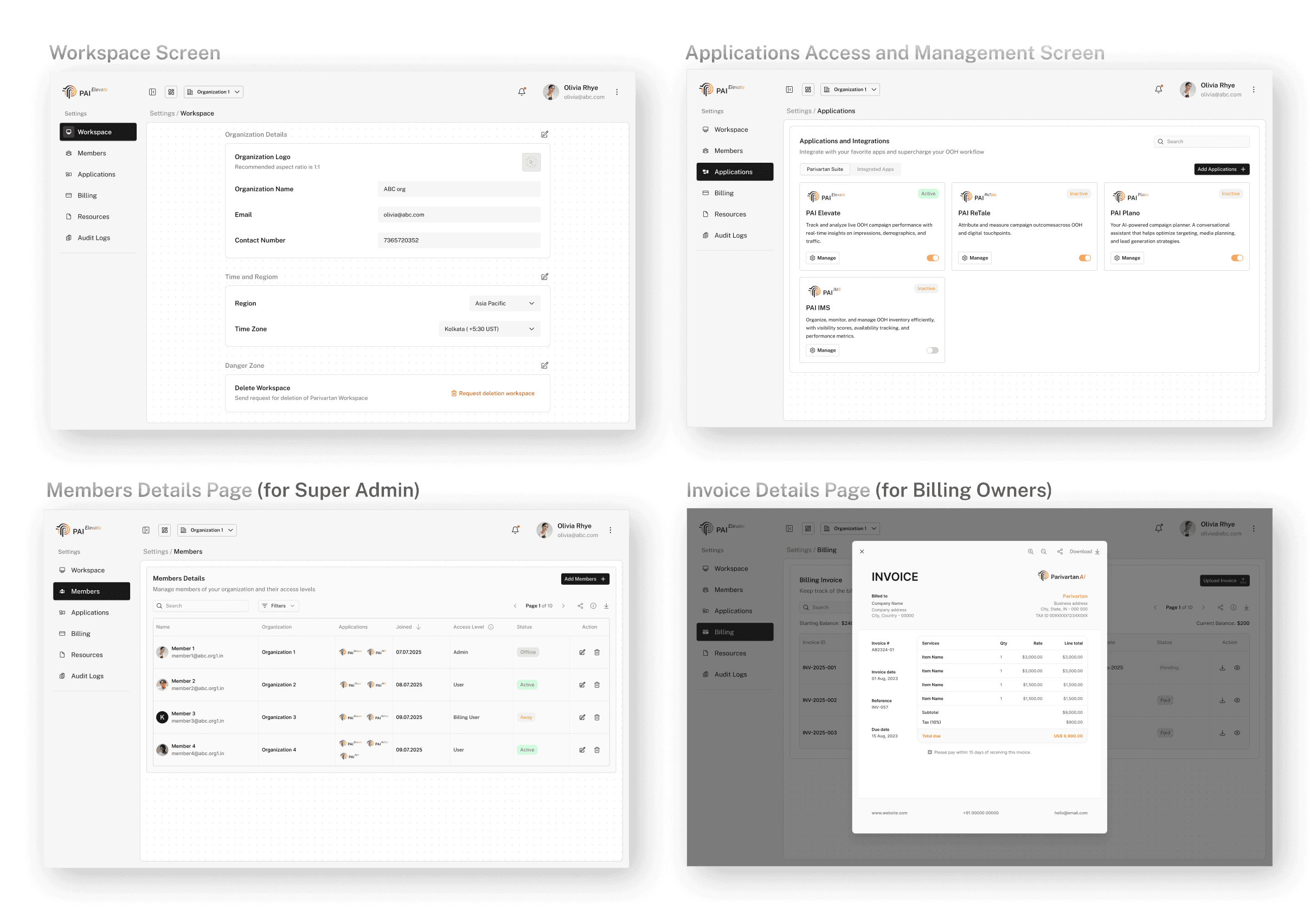
Implement support for multi-level tenant architecture and multi-organization handling to scale across diverse user groups.
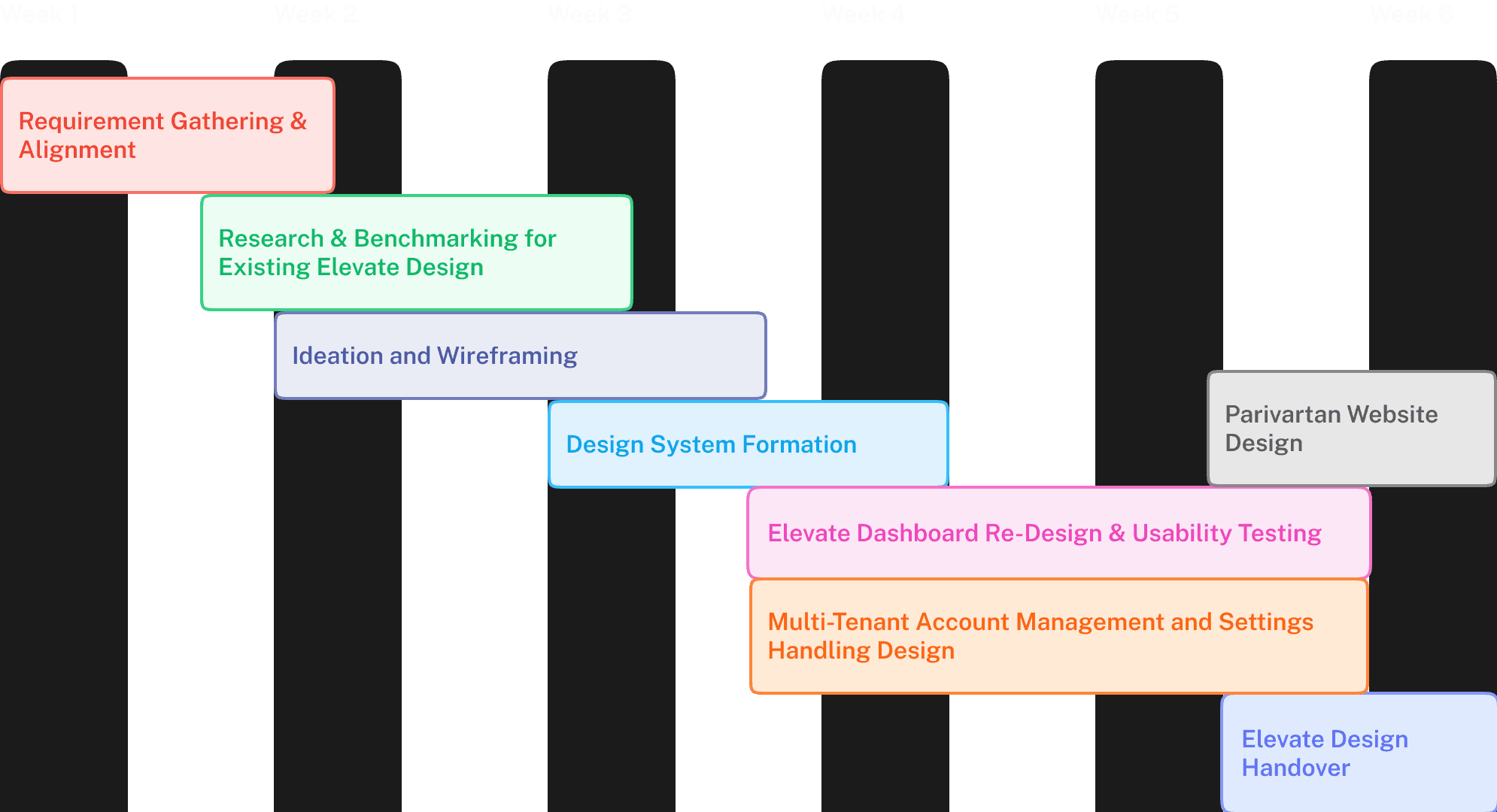
The whole project took about 6 weeks from requirement identification till design handover. This chart contains all the steps which were instrumental to the problems that were being solved with the redesign.

Parivartan Elevate is the real-time analytics layer of the Parivartan Ad Stack, tracking impressions, demographics, and traffic patterns to optimize OOH campaigns and enable re-engagement through digital channels.
Old Design
New Design
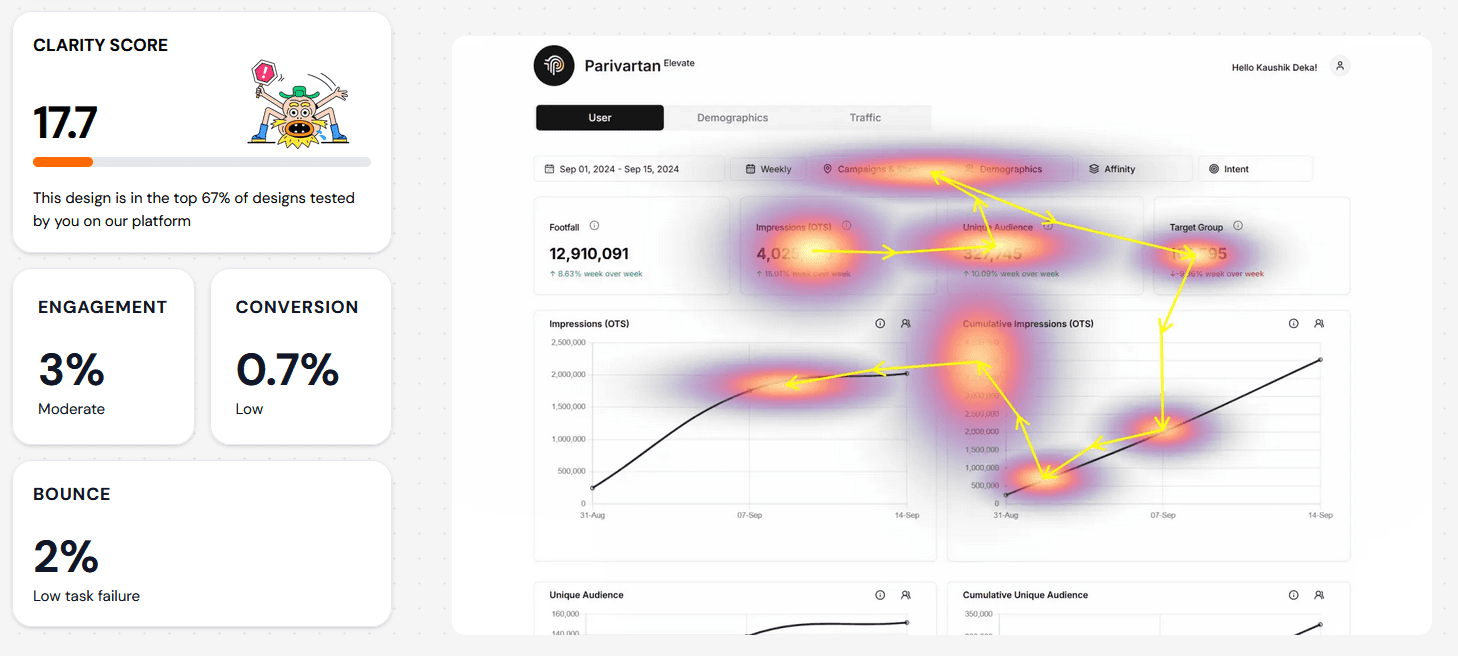
Poor Visual Hierarchy
All metrics and charts carried the same weight, making it difficult for users to quickly identify and focus on key KPIs like Footfall or Target Group.
Weak Interactivity
The graphs presented raw numbers but lacked actionable insights, flexible filtering, or contextual breakdowns, reducing clarity and interpretability..
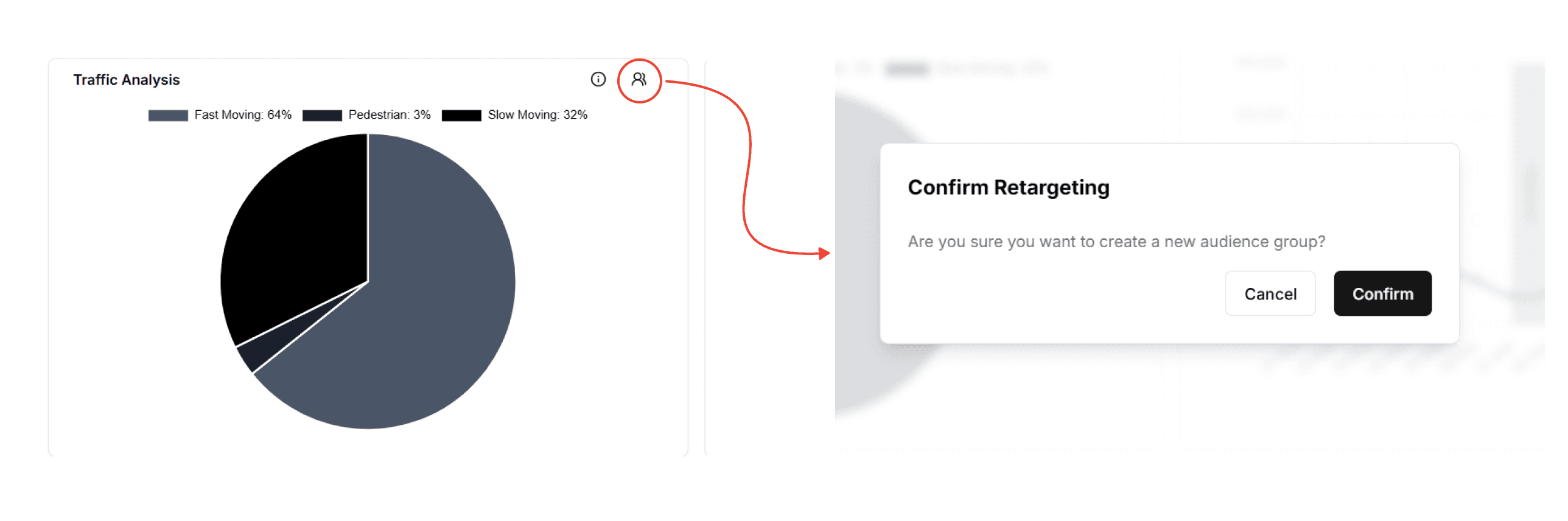
Scalability Issues with Re-Targeting
Adding target audiences wasn’t integrated into the dashboard; users had to submit requests for each graph individually, creating multiple redundant backend calls. Multi-user group retargeting also followed this cumbersome process, causing delays and unnecessary workload for the tech team.
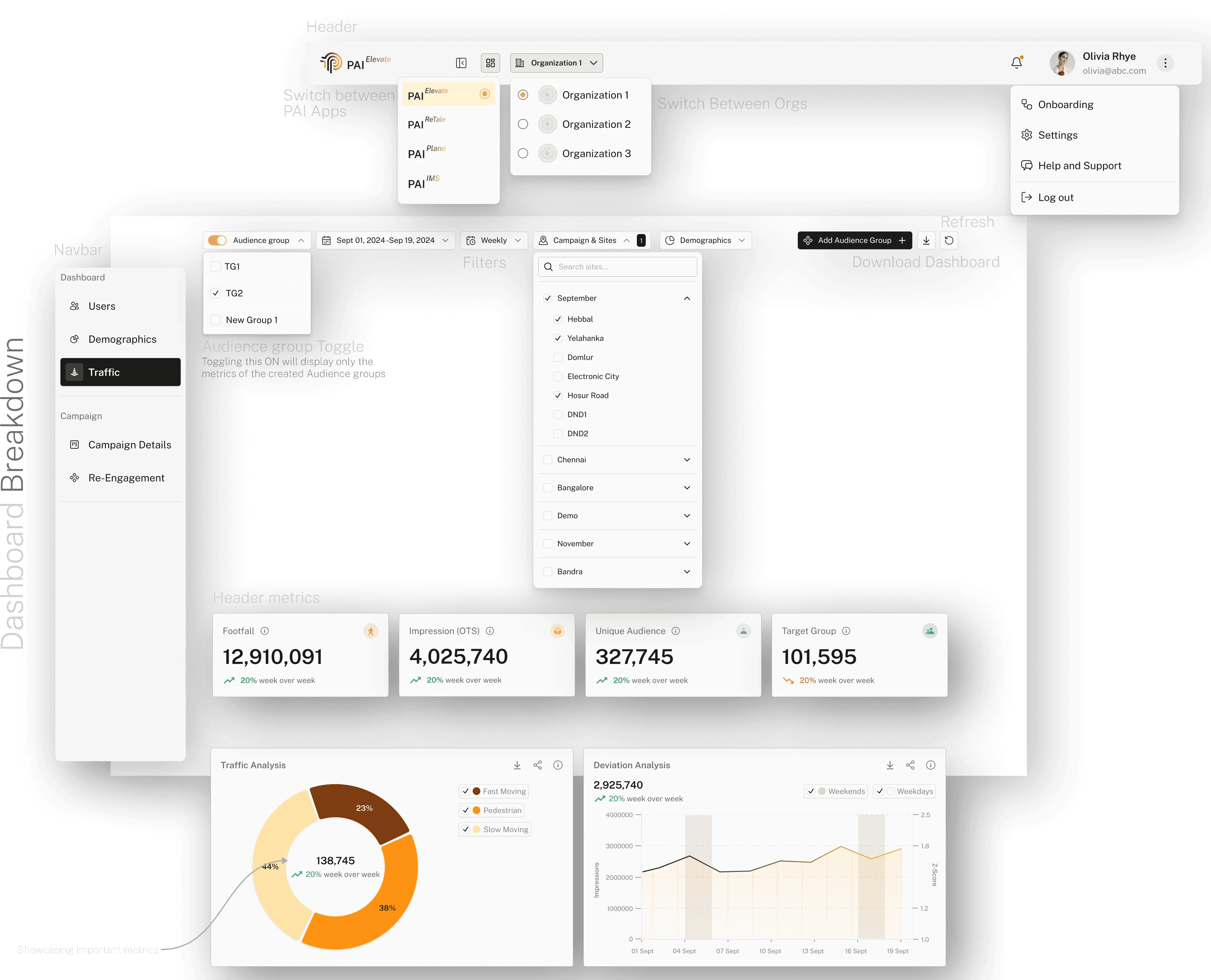
The information architecture of Parivartan Elevate is structured into three core tabs—Users, Demographics, and Traffic—each organizing campaign data into clear categories, with layered KPIs, charts, and filters for quick navigation. It enables users to move seamlessly from high-level campaign metrics to granular insights like visibility index, audience groups, and traffic patterns.
The new dashboard layout was designed with a clean, modular structure that highlights key KPIs upfront, supported by well-organized charts and insight panels. By improving hierarchy, spacing, and navigation, the layout reduces clutter, enhances readability, and allows users to move seamlessly from high-level campaign overviews to granular details. It creates a more intuitive and scalable experience, ensuring insights are actionable at every level.
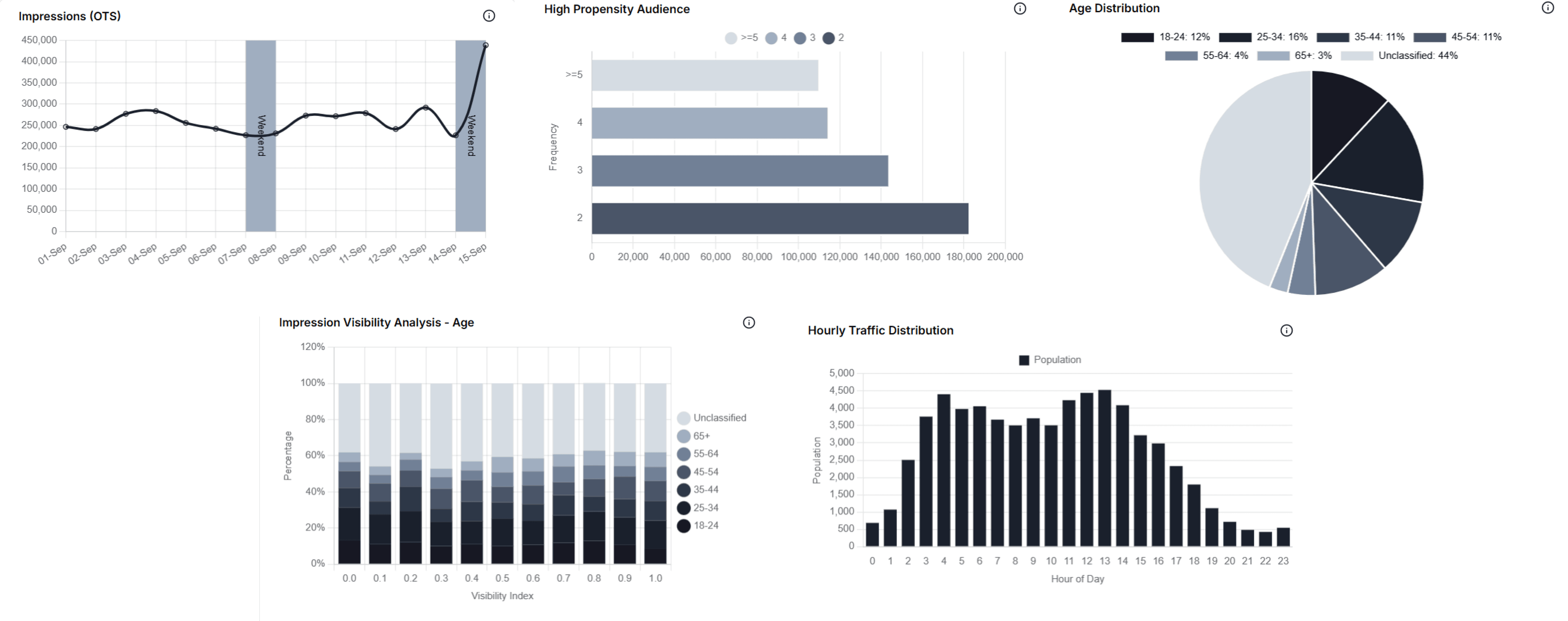
Improved data visualization by introducing clearer hierarchies, consistent color schemes, and modular chart layouts, making key metrics easier to compare and insights quicker to grasp.
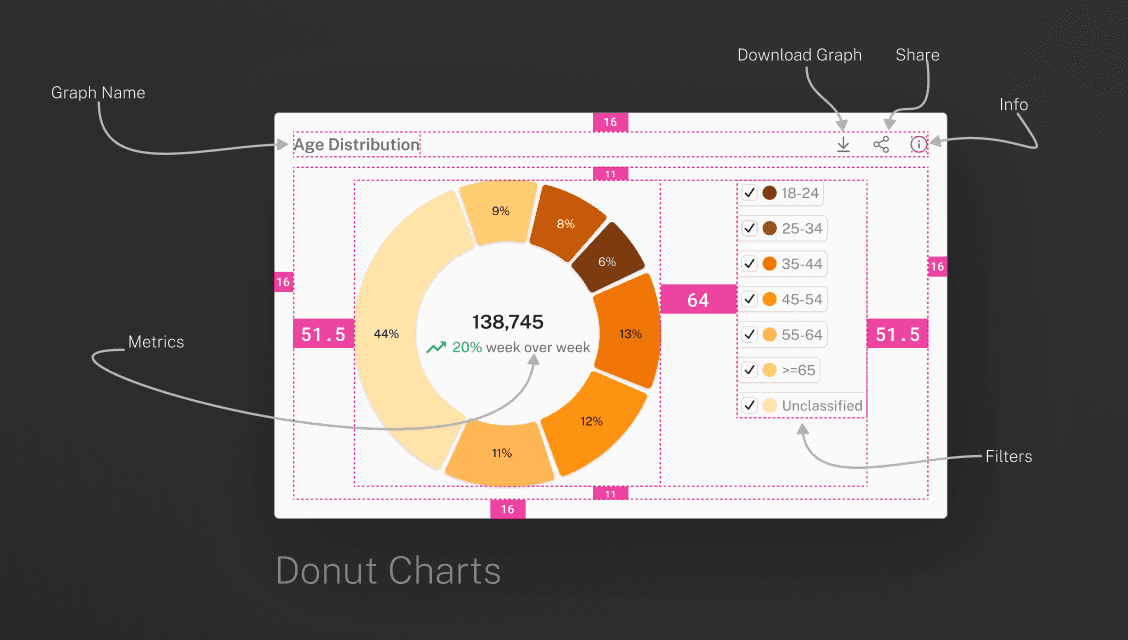
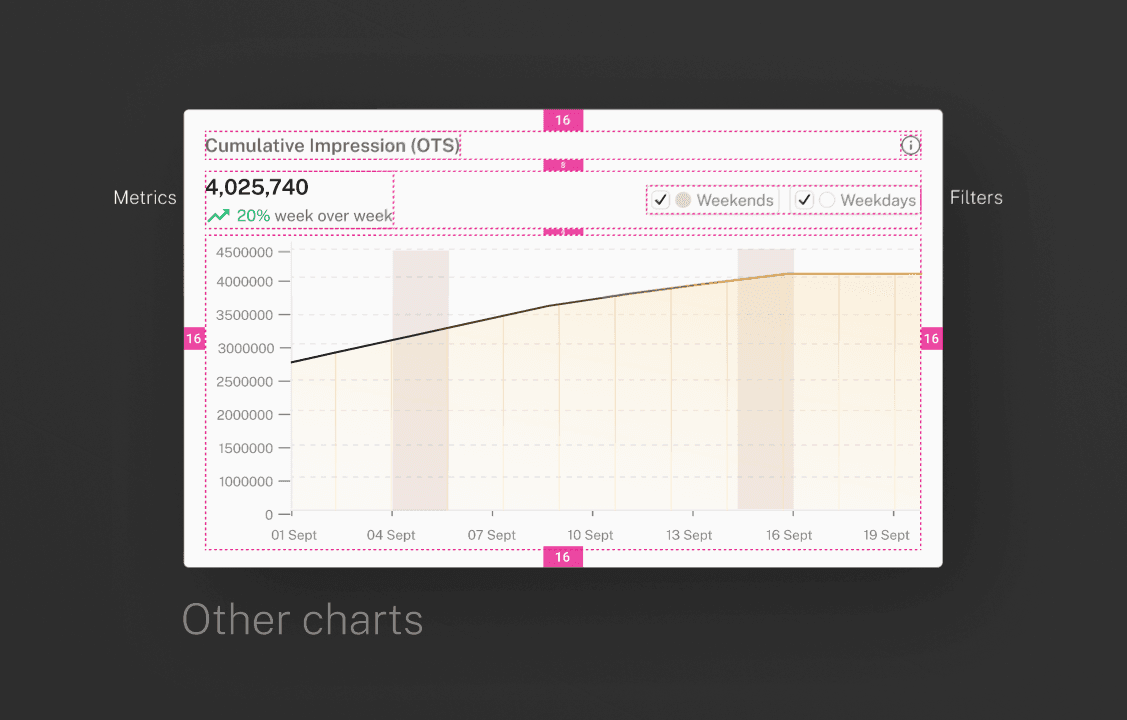
The bellow illustration shows the distinct differences between the new design of the charts as opposed to the old ones.
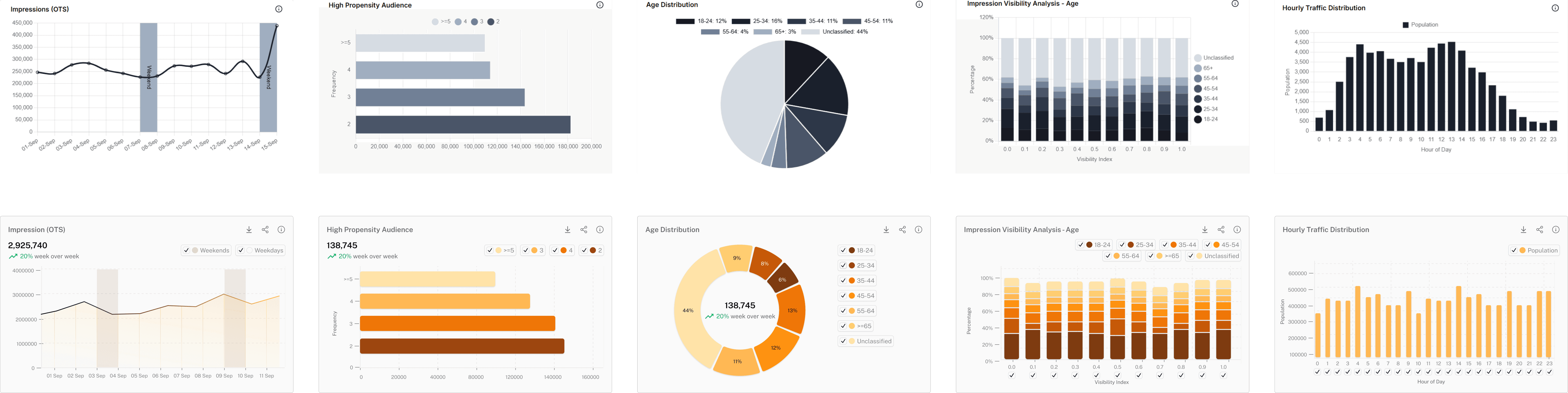
Improved graph interactivity by enabling users to toggle legends and apply filters directly within each graph, allowing dynamic exploration of metrics and reducing reliance on static views. This made data analysis faster, more intuitive, and customizable to user needs.
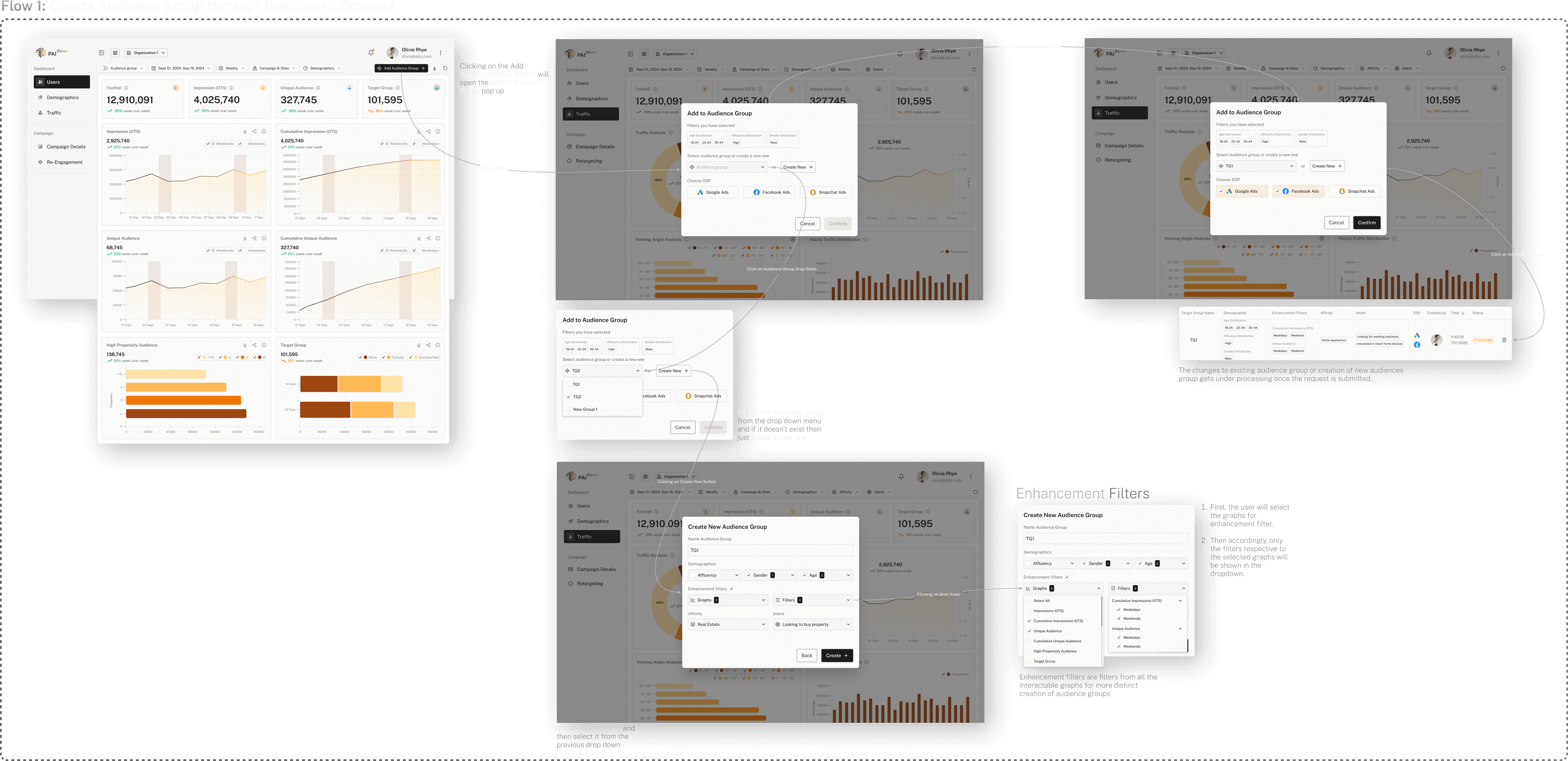
Streamlined target audience creation by consolidating it two independent flows within the Elevate dashboard. Instead of submitting separate requests for each graph, users can now define audience groups once using unified filters (age, gender, affluency, visibility index, etc.) and apply them across multiple graphs simultaneously. This reduced redundant backend calls, simplified multi-group retargeting, and significantly improved both user efficiency and tech team workload.
The Campaign tab allows users to view all active, completed, and upcoming campaigns with key details such as status, duration, and performance metrics. From the same tab, users can also submit a campaign addition request, which gets routed to the backend team for processing. This centralizes campaign visibility and creation, making it easier for users to manage their portfolio and track progress in one place.

Here is the breakdown of the different types of user groups that might use the Parivartan Ad Stack.
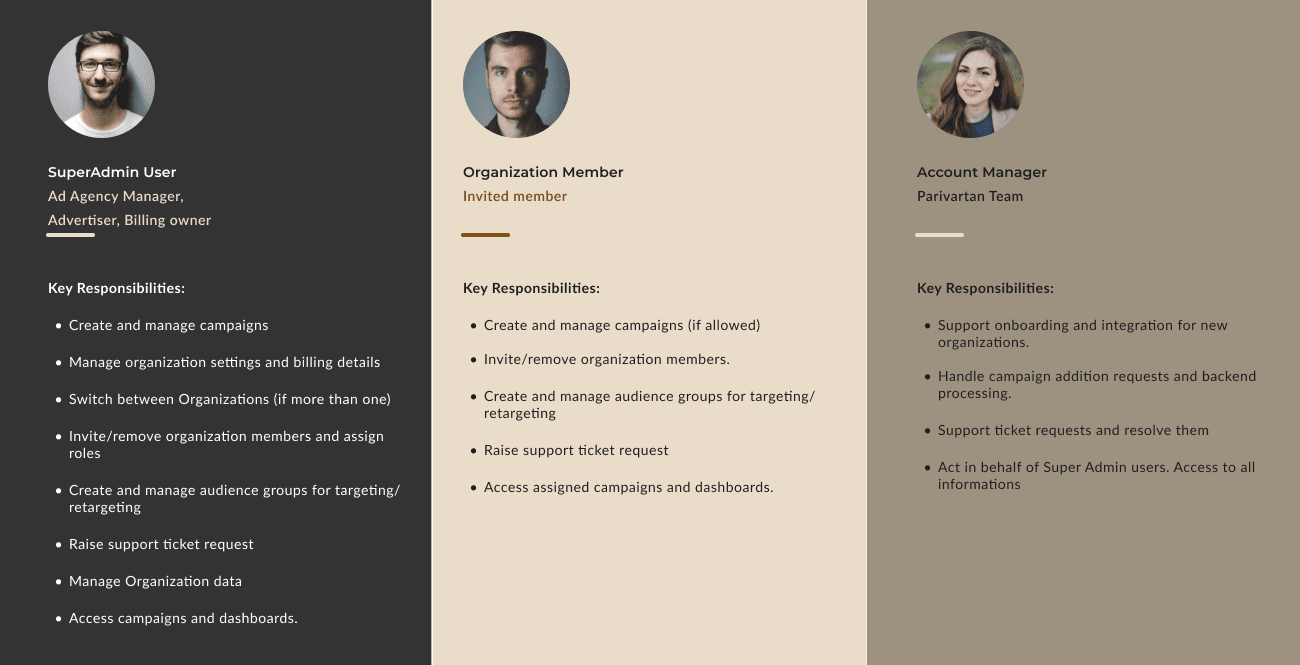
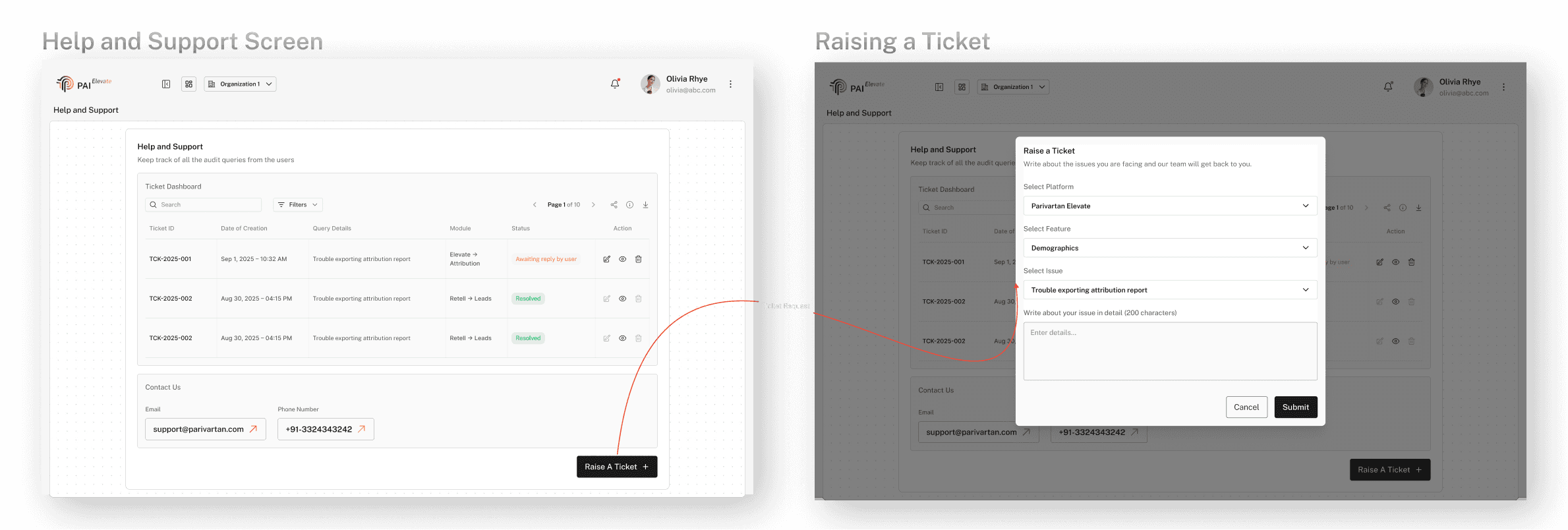
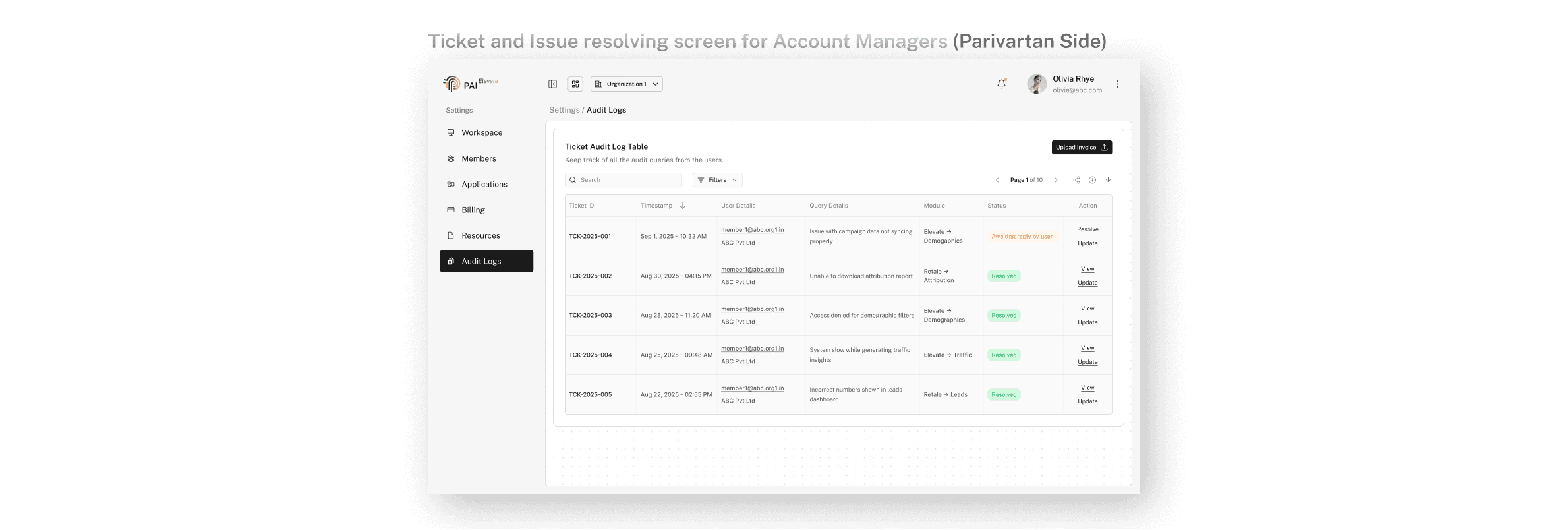
Introducing clear role-based access controls (SuperAdmin, Invited Members, Account Managers) and scalable permissions within the dashboard. This allowed agencies, advertisers, and billing owners to manage their own organizations while still collaborating with invited team members, and ensured backend account managers from Parivartan could provide oversight and support without interfering with day-to-day operations. The design created a flexible, scalable structure that adapts seamlessly to diverse user groups while maintaining clarity and control.
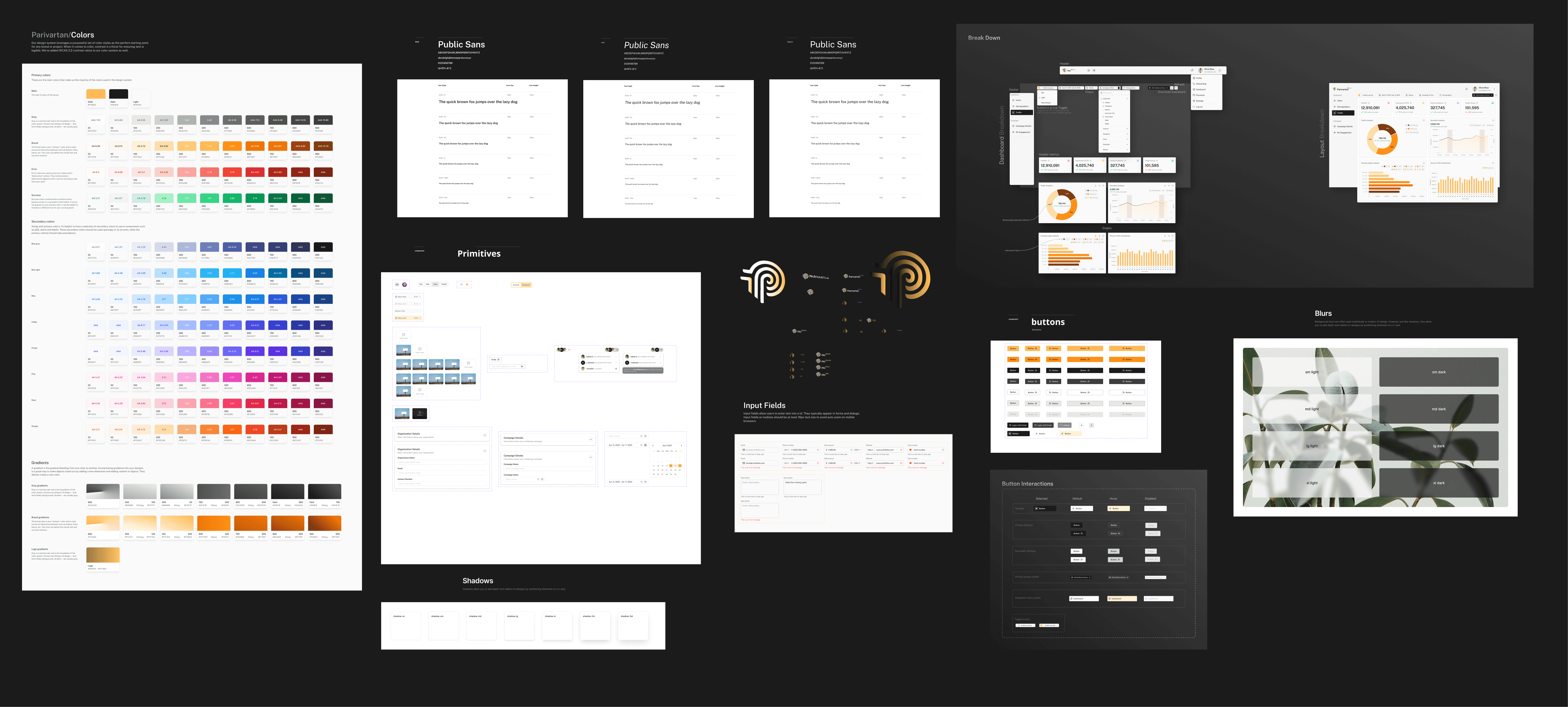
Developed a quick and scalable design system that included range of design assets, such as colours, typography, icons, layout guidelines, responsiveness guidelines, interactive elements behaviour, and feedback principles.
Increased Retargeting to Digital Mediums
38%
Improved visibility and streamlined audience group creation led to a 38% rise in retargeting requests to platforms like Google Ads and Meta.
Time-on-Task
65%
Average time to create and submit a retargeting request dropped from 7 minutes to 3 minutes, a ~65% efficiency gain.
Backend Redundancy Request Reduction
40%
Unified audience creation eliminated duplicate submissions, reducing redundant backend calls by 40%
Client Retentions
42%
42% of Agencies and advertisers began continued using the services of Parivartan Elevate for new campaigns and 38% increase in clients running multiple campaigns simultaneously after the redesign.